

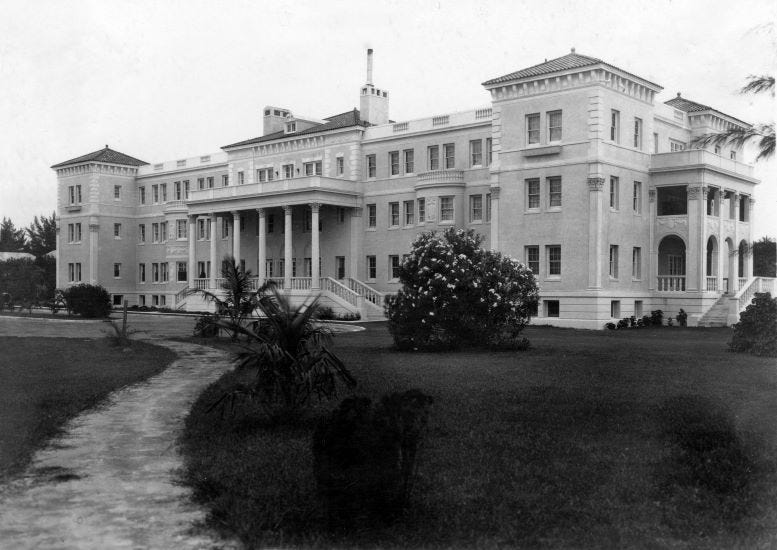
Though they were raised in the same household and bore the same surname, William II and Charles Brickell possessed strikingly different personalities. The men were the two oldest sons of William II and Mary Brickell. Charles was known as a polished, impeccably dressed gentleman who moved comfortably within Miami’s social elite. William III, by contrast, had a gruffer demeanor and preferred a quieter and more private approach. Unafraid to roll up his sleeves, he remained closely involved in the hands-on work of the projects he oversaw along Brickell Avenue.
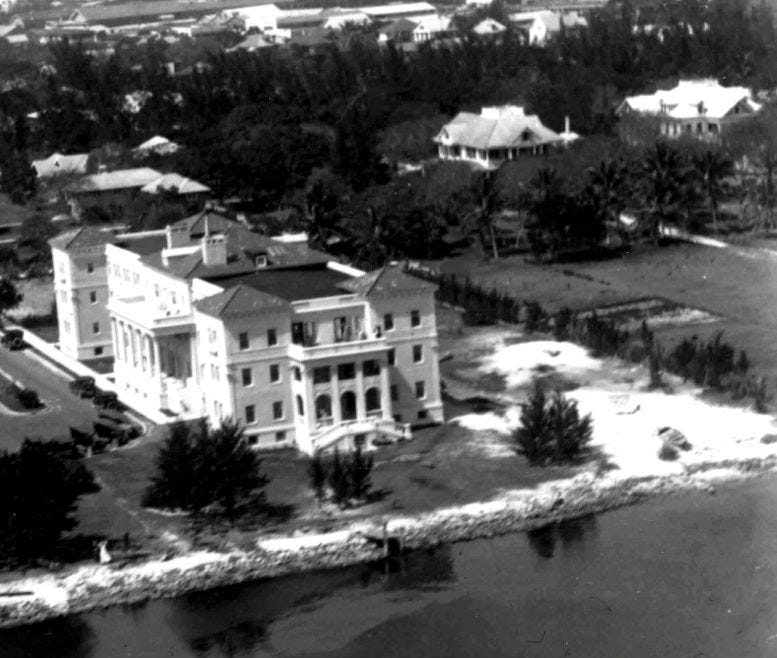
The contrast in temperament fueled a fierce sibling rivalry. When Charles developed a portion of the family’s land into the upscale Brickell Apartments, William III was determined not to be overshadowed. He responded by constructing a larger and more elaborate building, named the Bulmer Apartments, directly across the street from the Brickell apartment complex. The competition between the brothers was so obvious that neighbors would later reflect on the Bulmer complex as a “spite wall” erected by William III to block the formerly unobstructed northern vistas from the observation deck on the rooftop of Charles’s signature apartment building.
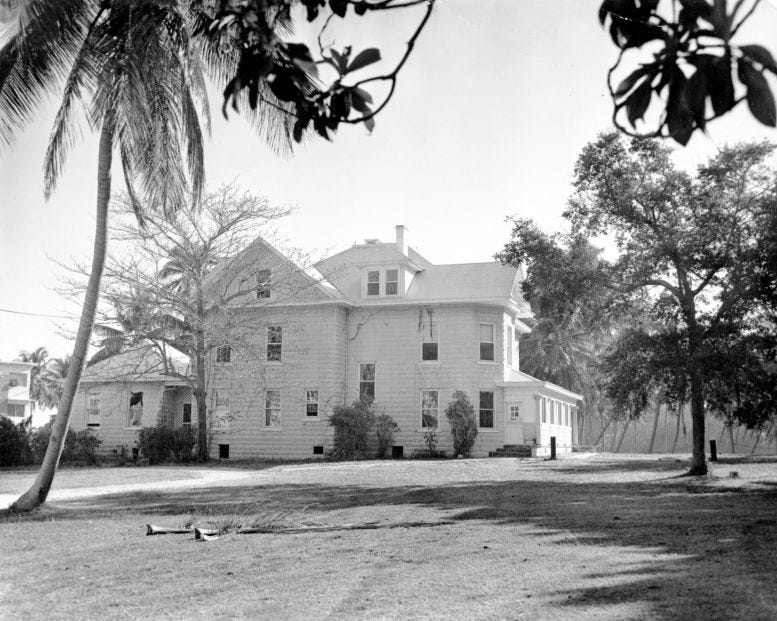
William III Mansion on Brickell Avenue
William and Mary Brickell’s eldest son welcomed his first child in 1910. William III and his wife, Olive, named their daughter Mary in honor of the Brickell family matriarch. Eight years later, William III would pay tribute again, this time by giving his mother’s maiden name to a grand and elegant apartment building he developed.
The year his daughter was born also marked another family milestone. In 1910, William III and Olive constructed a stately family residence at 617 Brickell Avenue. The spacious, white, wood-frame home was set well back from the street, a common design choice along Brickell Avenue that provided privacy and a sense of quiet retreat.
Situated just south of Brickell Point, where William and his siblings had grown up, the house stood in a neighborhood that still felt more like wilderness than suburb. Despite its proximity to downtown Miami, the area remained scenic and tranquil at the time William II completed his home.
A year and a half later, the couple welcomed their second and only other child. William IV was born on October 29, 1911.
By 1918, as Armistice Day signaled the end of World War I, William III was ready for a new endeavor. Although his residence was more than sufficient for his family, his competitive spirit would not allow his brother to remain the only developer of apartments in the Brickell area, especially at a time when rental units were scarce and at a premium. Determined to rival and surpass Charles’s Brickell Apartments, William III set out to build a larger and more impressive apartment complex of his own.
The Bulmer Apartments
As World War I ended, the collective sacrifices of Americans gave way to a strong desire for change. Many Northerners began seeking warmer climates for the winter months, while soldiers who had trained in Miami returned with the intention of making the city their permanent home.
This wave of seasonal visitors and new residents created an urgent demand for housing. Recognizing the opportunity, Charles Brickell moved quickly in 1917 to construct the Brickell Apartments. Although the building was considered impressive, his brother William III was intent on developing something even more striking.
