

It was said that one could always find Dr. James Jackson during his rounds by following the cheap cigar buds left behind at his patient’s homes. Dr. Jackson enjoyed a cheap cigar called the “Cinco”. Even he would joke and call them “Stinko” given the pungent odor they would emit. It was his practice to leave his cigar on the porch railing before entering the home of his patient. He would often forget to grab it prior to leaving for his next stop.
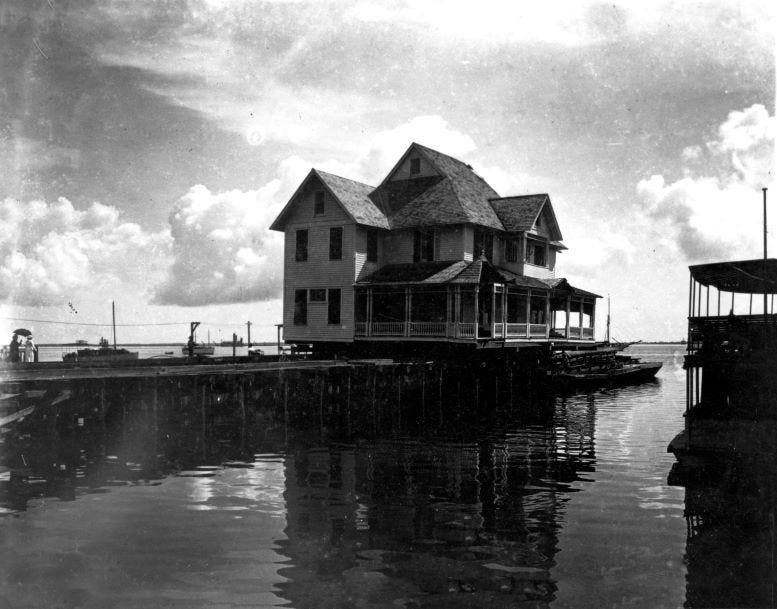
As the official physician of the FEC and the Royal Palm Hotel, Dr. Jackson kept very busy. He was not only known as Miami’s first physician, but he was known for always being on the move. In September of 1916, Dr. Jackson’s home and office made the news for also being on the move.
Dr. James Jackson Arrives in Miami
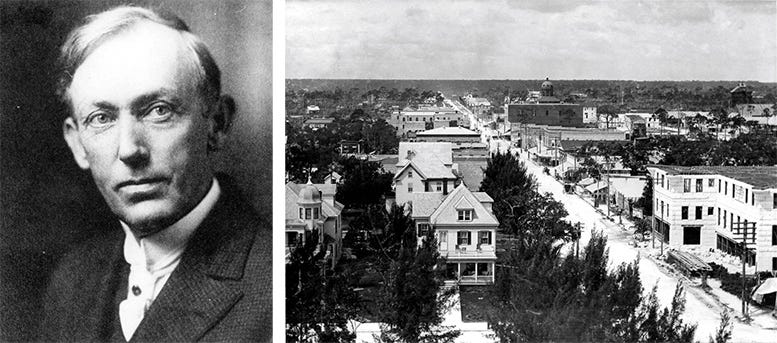
Like so many other pioneer Miamians, Dr. James Jackson was made aware of the area following the freezes of 1894 and 1895. At the time, Dr. Jackson was a young physician practicing medicine in Bronson, Florida with his father. Bronson was a small town that experienced a mass exodus when the freezes of 1894 - 1895 destroyed the citrus industry.
It was around this time that Dr. Jackson met J.R. Parrott, Flagler’s right hand man, who offered Jackson a job to be the Florida East Coast Railroad surgeon at the soon-to-be terminus of the railroad at Biscayne Bay. In April of 1896, Jackson decided to take a trip to check out the place he would call home if he chose to take the job.
Dr. Jackson took the train to Fort Lauderdale and then traveled to the mouth of the Miami River by a small steamboat. The availability of places to stay were scarce. There was a moored steamboat called Rockledge that many newcomers would stay. The Hotel Miami was still under construction. There were more people arriving than the area could accommodate.
Jackson walked north on Avenue D (today’s Miami Avenue), and began to inspect the area that would become Miami. In less than an hour, Jackson walked the length and width of what had been developed at that point. Disappointed in what he saw, he went back to the landing to determine when he could catch the next boat back to Fort Lauderdale. He was informed that there wouldn’t be any transportation to Fort Lauderdale until the train arrived a few days later.
Resigned to staying until the train arrived, Dr. Jackson took the opportunity to get to know the early settlers. He became very impressed with the enthusiasm of the area. By the time the train arrived on April 15th, Jackson had made the decision to take the job and relocate himself and his wife to the wilderness that would become Miami.
Dr. and Mrs. James Jackson Move to Miami
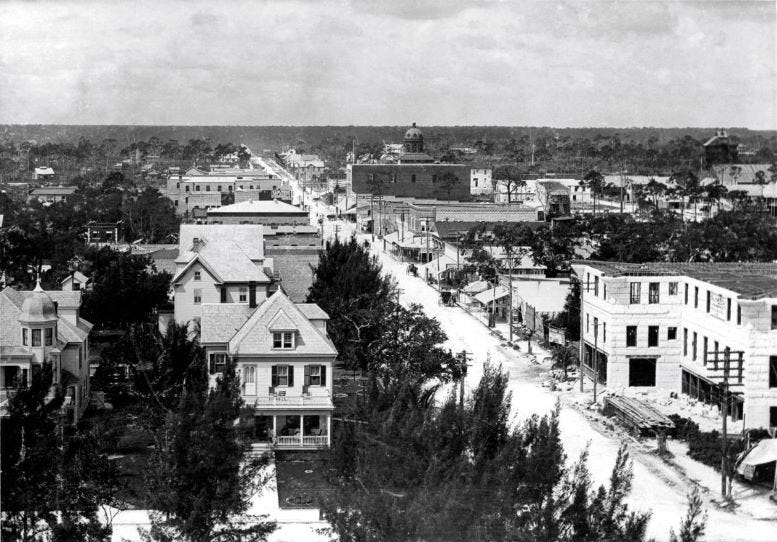
In September of 1896, Dr. Jackson joined his wife in Jacksonville to bring her to Miami. Initially, they lived in a temporary residence at Hotel Miami. The hotel was built by Julia and Harry Tuttle and didn’t officially open until January of 1897. However, even though the hotel wasn't completed, it accommodated guests prior to its official opening.
After a few weeks at the Hotel Miami, the couple moved to a loft above a store on the west side of Avenue D. On January 1st, 1897, they moved to a cottage in town and later that year moved to a house on the southwest corner of Twelfth Street and Avenue B (renamed to Flagler Street and SE Second Avenue, respectively). This home would later become the location of the Olympia Theater on Flagler Street.
While sitting on the porch of the home and gazing at the pine land that was diagonal to their property, Mrs. Jackson convinced Dr. Jackson to make an offer for that lot which was located on the northeast corner of Twelfth Street and Avenue B. The lot was owned by Julia Tuttle and it was one hundred feet on Twelfth Street (Flagler Street), by one hundred forty feet on Avenue B (NE Second Avenue). The Jacksons bought the property from the Tuttles for $2,500.
Dr. Jackson Built a House and Then His Office
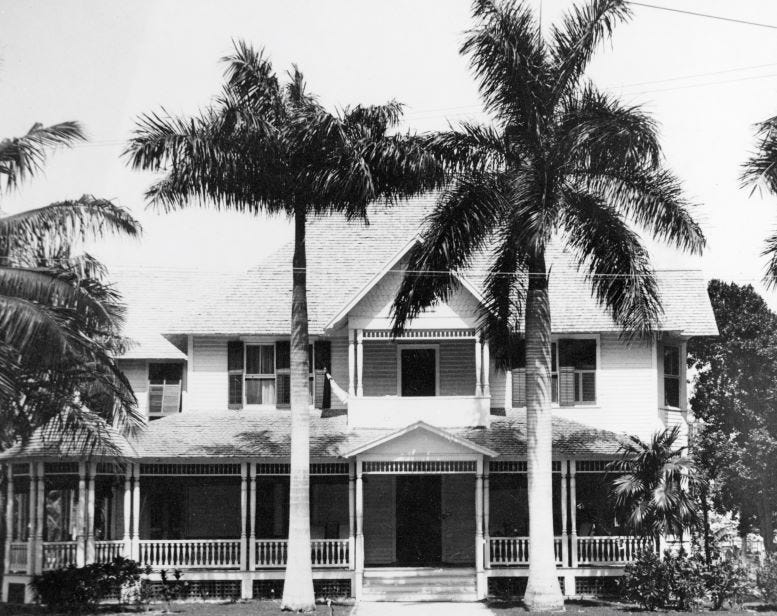
Spanning the summer to the fall of 1899, the Jackson’s built the home that their family would live in for almost 20 years. The home would sit right on the corner of Twelfth Street and Avenue B. The Halcyon Hotel was built in 1903 and would sit directly west of the Jackson Home. The Halcyon would remain at this location until it was demolished in June of 1937. The Alfred I Dupont building was built where the Halcyon Hotel once resided and still remains there today.
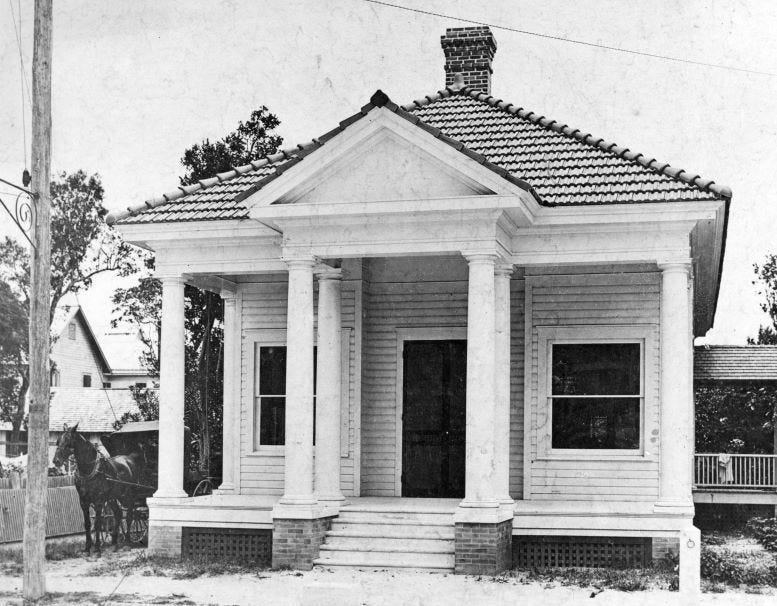
In 1905, Dr. Jackson decided to build his office directly behind (to the north), his home on Avenue B. Both of these buildings would serve Dr. James Jackson well until he decided to move out of the city to the Brickell neighborhood. Jackson leased the land to a developer that built a theater and office building. As part of the lease arrangement, Dr. Jackson acquired a contract for a lifetime, rent-free office in the building which was erected there.
However, Dr. Jackson did not want to see his home and office demolished. At first, he tried to sell both buildings, but could not find a buyer. He owned property on Ocean Beach (Miami Beach). He felt that if he couldn’t sell his home, he would move his home and office across the bay to that property.
