


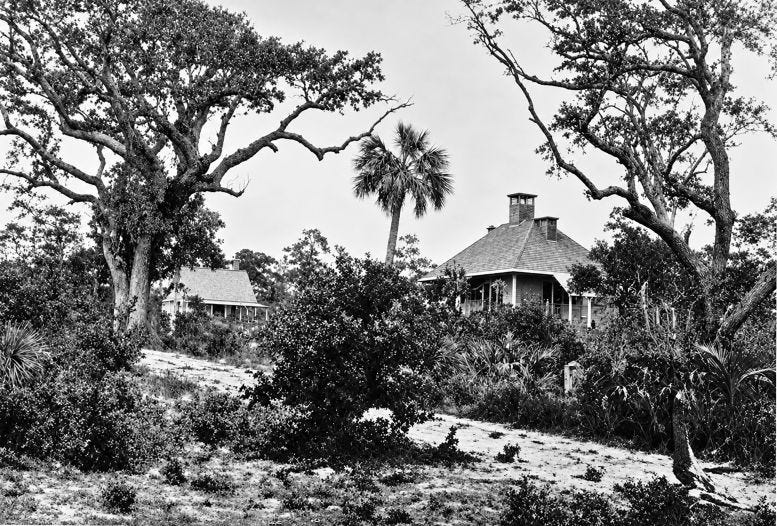
The cover photograph offers a rare glimpse of one of Coconut Grove’s most prominent thoroughfares, years before the City of Miami was established. At the time, the roadway was known as Church Street, although residents also referred to it as the Grove’s main street. It would later be renamed McFarlane Road in honor of one of the community’s most influential early pioneers.
Prominently featured in the photograph is Union Chapel, a nonsectarian house of worship constructed on land donated by Commodore Ralph Munroe in August 1892. The chapel quickly became an important gathering place for the small but growing community. In her daybook entry dated May 31, 1893, Mary Barr Munroe, wife of author Kirk Munroe, recorded that one of the first brides married in the chapel was Alice Burrows, a Black Bahamian woman.
To the left of Union Chapel stands the residence of Coconut Grove pioneers Charles and Isabella Peacock. At the urging of Commodore Ralph Munroe, the couple established the community’s first hotel in 1882, naming it Bay View Villa, also referred to as Bay View Inn. The establishment, which helped accommodate the growing number of visitors to the settlement, was renamed the Peacock Inn in the late 1880s.
Union Congregational Church
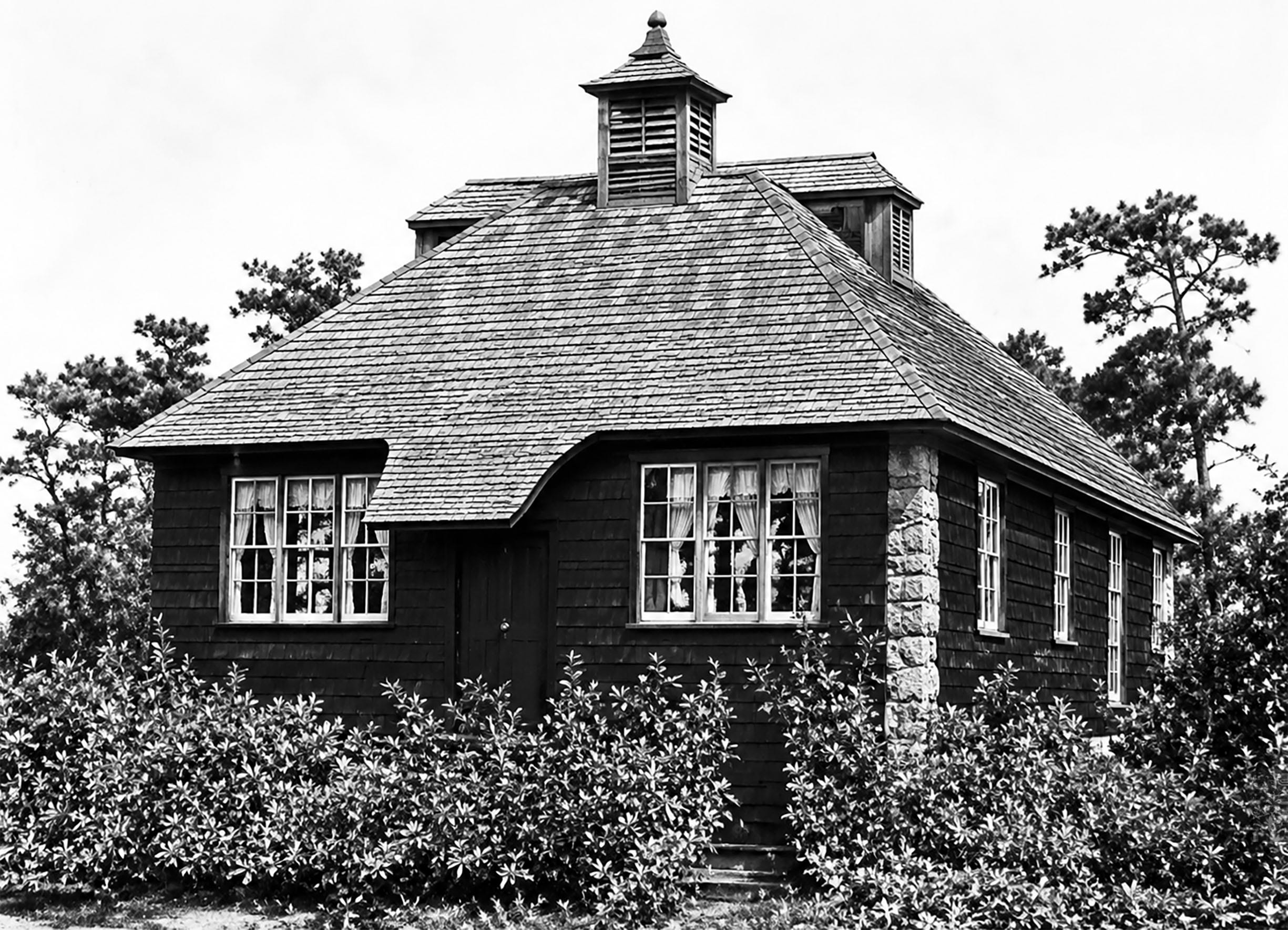
Although Union Chapel was Coconut Grove’s only established place of worship, interest in attending regular religious services began to wane shortly after its construction. For several years, services were held intermittently until the Congregational Society petitioned the chapel’s trustees for permission to use the building as a Congregational church.
With this transition, Reverend James Bolton assumed leadership of the newly established Union Congregational Church of Coconut Grove. Bolton had come to South Florida seeking refuge from the harsh New England winters and served as minister of the congregation from 1897 until 1901. Upon his retirement, he passed the pastoral responsibilities to Reverend Solomon Merrick, father of George Merrick, who would later become the founder of the City of Coral Gables.
Reverend Solomon Merrick stepped down as pastor in 1909 to devote his attention to his expanding citrus plantation in what was then known as Coconut Grove’s backcountry, an area that would eventually become part of Coral Gables. Following his departure, the congregation relied on a succession of interim ministers until Reverend George B. Spaulding was called to lead the church.
Under Reverend Spaulding’s leadership, the congregation entered a new chapter with the construction of a much larger sanctuary in 1917. Designed in the Spanish Mission style by New York architect Clinton MacKenzie, the new church was erected at 3400 Devon Road in Coconut Grove. Four years later, on July 29, 1921, the congregation voted to change its name from Union Congregational Church to Plymouth Congregational Church, establishing the identity by which it would become known for generations.
Flora McFarlane
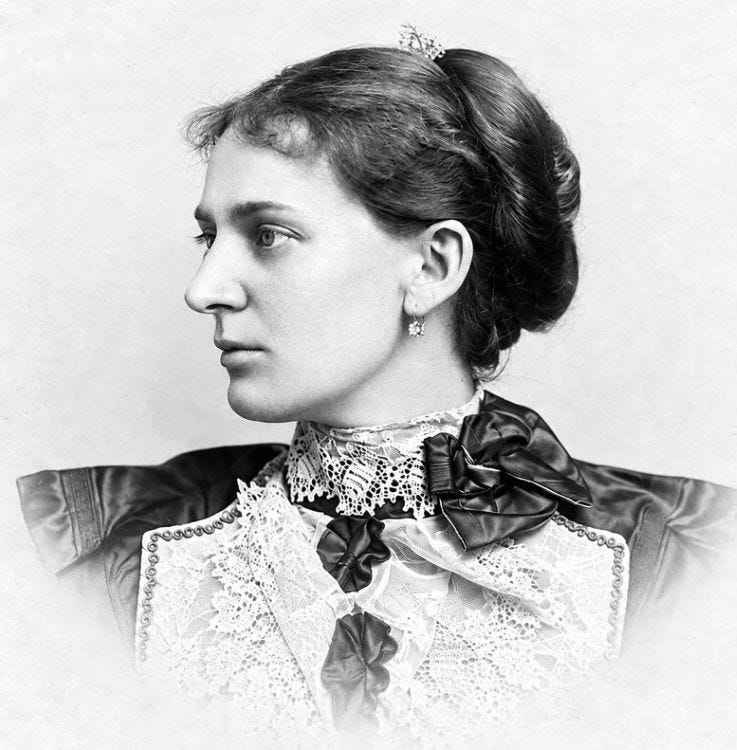
In 1886, Flora McFarlane arrived in Coconut Grove as a companion and guest of Ellen Munroe, the mother of Commodore Ralph Munroe. What may have begun as a temporary escape from New Jersey’s harsh winters ultimately became a permanent relocation to South Florida.
