


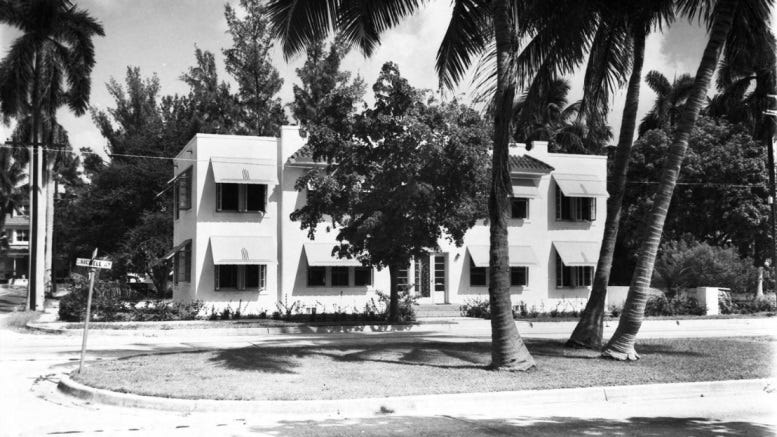
The cover image captures the Morris Apartments at 1309 Brickell Avenue on August 24, 1948. Originally constructed in 1921, the building opened the following year as the Royal Apartments. After a sale in 1924, the property was rebranded as the Royal Palm Apartments, reflecting a subtle shift in identity during Miami’s early growth years.
Marketed as spacious four-room residences, the apartments were described in advertisements as “very elaborately furnished.” Promotional materials emphasized the building’s prime location near Biscayne Bay, highlighting the cooling bay breezes and the convenience of a short walk to downtown. When the property debuted in 1922, units rented for $30 per month. By 1933, rents had increased to $60 under lease, or $70 for month-to-month occupancy.
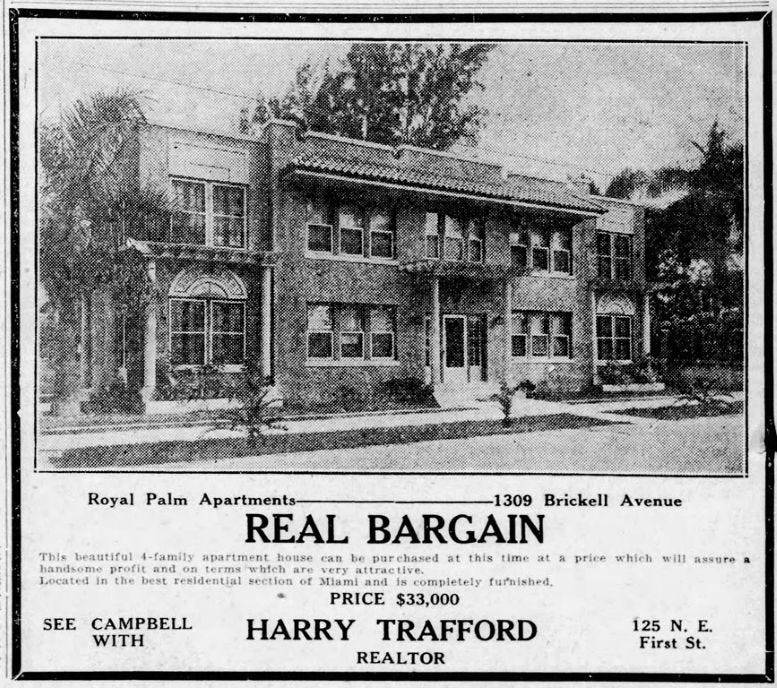
In the mid-1940s, the building was acquired by Harry Morris, who renamed it the Morris Apartments. It continued to operate as a residential property until 1967, when it was converted into commercial office space for the Dodd Realty Corporation. The firm remained in the building until its sale and eventual vacancy in 1981.
One of the more colorful tenants of the Morris Apartments was Roger Steadman, a pilot who resided in the building in 1958. That year, he was arrested on charges of conspiracy to launch a military expedition against a friendly nation and to unlawfully export arms and ammunition. Steadman had agreed to assist a group of twenty-two Cuban rebel sympathizers in transporting weapons to Cuba during a volatile moment in the island’s history.
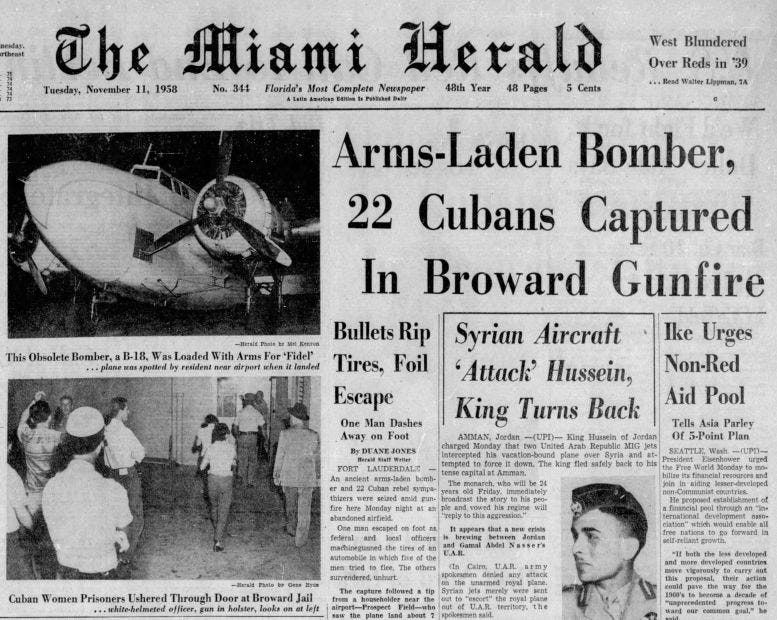
The plan centered on an aging B-18 bomber, which the group intended to fly from Prospect Field in Fort Lauderdale to Cuba. The aircraft was to be loaded with rifles, submachine guns, ammunition, and field equipment. Prospect Field, originally known as West Prospect Satellite Field, had been constructed in 1941 as a training base for Naval aviators during World War II. After the war, the federal government transferred the site to the City of Fort Lauderdale in 1947, where it evolved into today’s Fort Lauderdale Executive Airport (FXE).
The operation unraveled when nearby residents reported suspicious activity at the airfield. Members of the group had driven ten cars onto the property and begun unloading crates of weapons onto the plane. Law enforcement quickly intervened, triggering a chaotic series of events that included machine gun fire and multiple car chases. By the end of the night on November 11, 1958, authorities had arrested twenty Cuban men, two Cuban women, and one American, Steadman.
In the aftermath, Steadman acknowledged that the overloaded B-18, which pre-dated World War II, likely would never have made it off the ground due to the cumulative weight of the cargo. Each crate loaded onto the aircraft bore a single, telling label: “Fidel.”
Sources:
Miami Herald: “Arms-Laden Bomber, 22 Cubans Captured In Broward Gunfire”, November 11, 1958.
Another great tale by Casey of Miami history!