


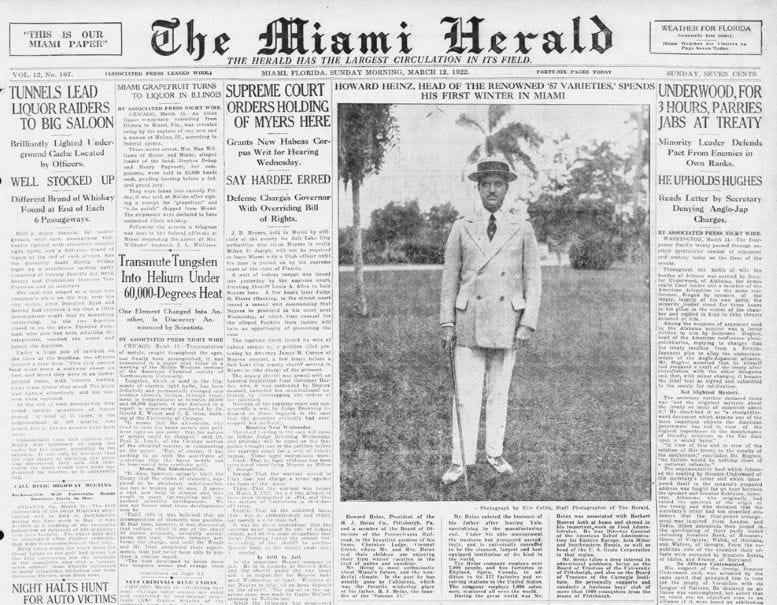
A headline on the front page of the Miami Herald on March 12, 1922, proclaimed: “Tunnels Lead Liquor Raiders to Big Saloon.” By that time, the nationwide campaign to eliminate the manufacture, sale, and distribution of alcohol, set in motion by the Prohibition in the United States, had been underway for two years. As enforcement tightened, bootleggers became increasingly inventive in how they transported and concealed their illicit liquor.
Although Miami had developed a reputation as one of the most porous cities in the country during Prohibition, those involved in the illegal trade still relied on discretion and careful planning. Federal agents and local authorities regularly patrolled the waterfront, hoping to intercept gunny sacks filled with liquor arriving by boat from the Bahamas and other nearby sources.
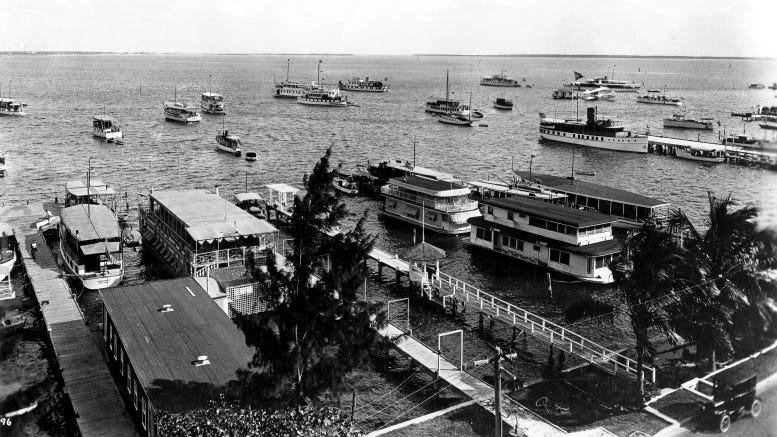
One such investigation focused on a fish company located near the city’s municipal docks along downtown Miami’s North Bayshore Drive, today known as Biscayne Boulevard. Miami’s Prohibition director, Tom Foreman, joined Joe Byrd after receiving a tip that the warehouse might conceal more than seafood.
Inside the fish house, investigators uncovered a trapdoor hidden beneath a large pile of sawdust. When they lifted the hatch and descended a stairway roughly six feet below ground level, they discovered a surprisingly elaborate underground chamber. The room was brightly illuminated and connected to six tunnels that stretched out in different directions, each corridor lit well enough for the raiding party to explore.
At the end of the passageways, the officers found caches of liquor carefully stored along the routes. Altogether, the raid yielded 35 cases of alcohol. No arrests were made, but authorities believed they had uncovered an unusually sophisticated system for smuggling and storing contraband, one that had clearly been constructed with considerable planning and expense.
The newspaper described the discovery in dramatic terms:
“Half a dozen tunnels, far underground, with each passageway brilliantly lighted with attractive electric light bulbs, and a different brand of liquor at the end of each avenue, was the discovery made during Friday night by a prohibition raiding party.”
Resources:
Miami Herald: “Tunnels Lead Liquor Raiders to Big Saloon”, March 12, 1922.
love this story! This is the OG source for Miami History. Thanks!
Fascinating! I have to wonder how they ever dug these out given the limestone "Miami Oolite"
nature of our native city! Maybe existing caves.