

The Twenty First Amendment to the United States Constitution was ratified on December 5, 1933. It reversed the Eighteenth Amendment and, once again, legalized the sale and distribution of alcohol. People all over the United States hoisted their favorite alcoholic beverage to celebrate the milestone.
While the change in law allowed for the unfettered production and distribution of alcohol anywhere in the United States, beer enthusiasts in Miami were without a local brewer. They needed to wait for brewers from other parts of the country to ship beer into the local market. The owners of City Ice and Fuel Company took notice and capitalized on the opportunity.
Wagner Brewing Company
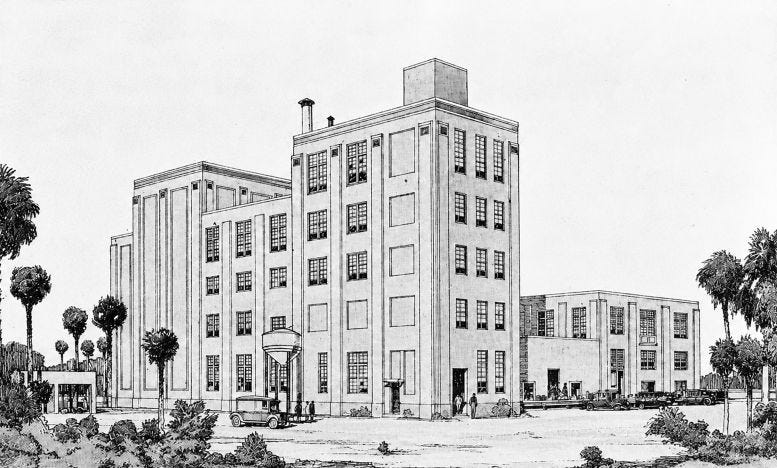
By the early 1930s, the City Ice and Fuel Company of Miami was confronting a significant change in consumer habits. As electric refrigerators gradually replaced traditional iceboxes, demand for household ice began to decline. The repeal of Prohibition offered the company an opportunity to diversify its operations and enter a promising new industry.
Soon after ratification of the Twenty-first Amendment, company executives purchased enough material from a nearby brickyard to construct a brewery at 637 NW Thirteenth Street in Miami in the heart of the Overtown neighborhood and across the street from Booker T. Washington High School.
The resulting structure was an imposing two-story brick building. Brick was commonly used in brewery construction because its insulation properties helped keep the interior cool while also providing the strength needed to support heavy brewing equipment. Completed in June 1934, the new brewery opened just as Miami entered the hot summer months, when demand for cold beer was especially high.
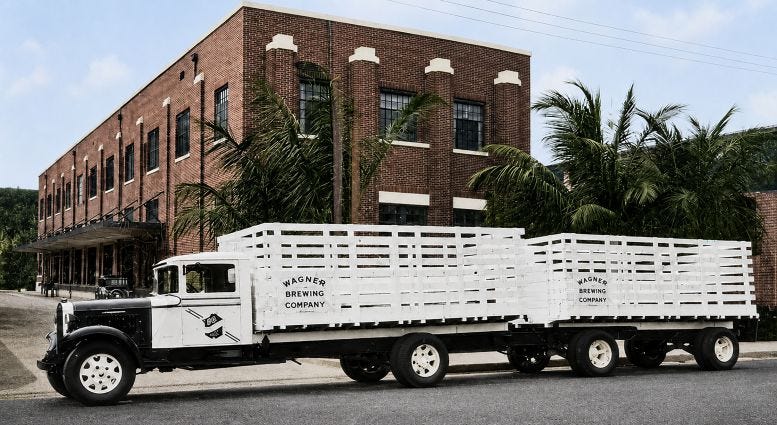
The executives of the City Ice and Fuel Company were not newcomers to the brewing industry. The company also owned a beer business in Granite, Illinois, where the “Wagner” trade name originated. Drawing on that experience, the company named its new Miami operation the Wagner Brewing Company.
Among the first beers produced at the Miami brewery were brands such as Wagner, Pride of Florida, and Daily Double. When production began in 1934, the brewery was wholly owned by the City Ice and Fuel Company and promoted its products with the fitting slogan, “Perfect for Hot Miami.”
American Brewing Company
Within a few years of opening its Miami brewery, the Wagner Brewing Company expanded its interests beyond South Florida. The company acquired the Pilsener Brewing Company of Cleveland and also purchased a substantial interest in the American Brewing Company of New Orleans.
By 1938, national advertising had made Miami consumers increasingly conscious of beer brands and their reputations. Many local drinkers regarded beer shipped from St. Louis and other northern brewing centers as superior to products made in Miami. Some advertising campaigns even promoted the notion that South Florida’s water was unsuitable for brewing quality beer.
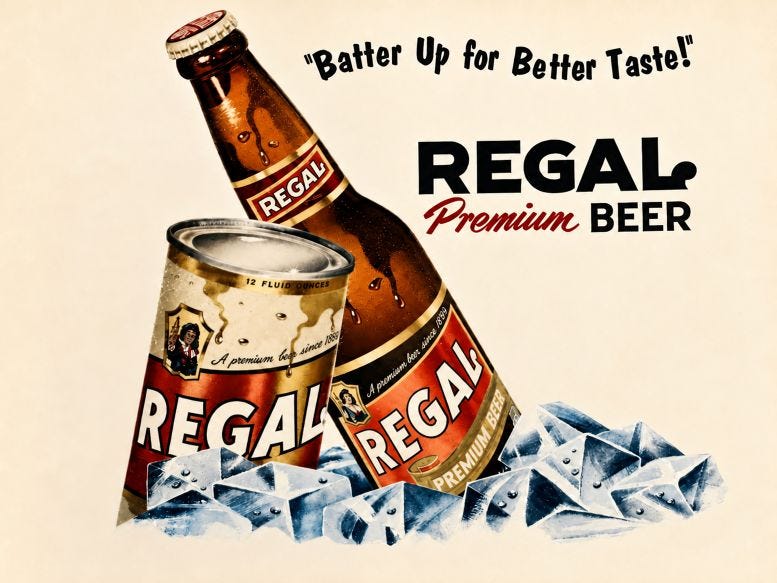
As Wagner Brewing began to lose market share, company leaders recognized that they needed to overcome the perception that their beer was inferior. They turned to the American Brewing Company for guidance in strengthening their marketing and brand identity. Founded in New Orleans in 1890, American Brewing had built a successful business around its most popular product, Regal Beer. According to company lore, the name “Regal” was created by spelling “lager” backward.
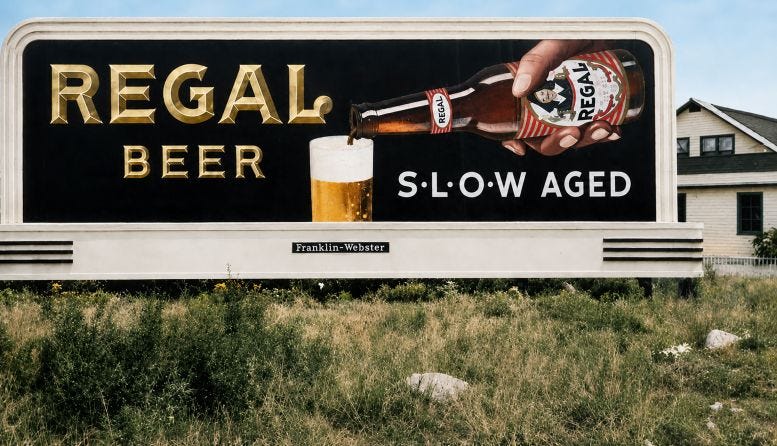
Wagner Brewing ultimately introduced a new product line and adopted a new corporate identity. The Miami operation became the American Brewing Company of Miami and began producing Regal Beer. By 1939, Regal Beer and Regal Ale were the only products brewed at the Miami plant.
You Can’t Drink Freight
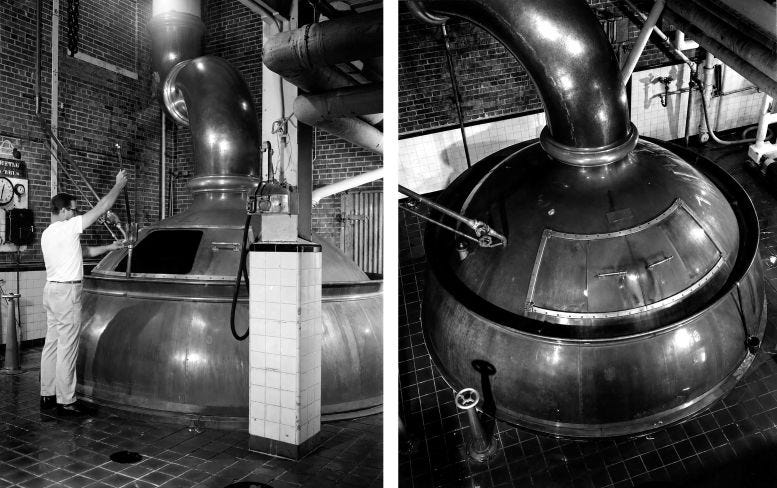
The company’s new management made it a priority to challenge the belief that Miami’s water was unsuitable for brewing quality beer. Samples of local water were tested alongside those from prominent brewing centers across the country. The results indicated that Miami’s water compared favorably and, in some cases, was considered superior to the water used by several well-known breweries.
The American Brewing Company promoted these findings through a new advertising campaign designed to build confidence in its locally produced beer. The company also emphasized the cost advantage of brewing in Miami rather than shipping beer from distant markets. One memorable slogan declared, “You Can’t Drink Freight,” reminding consumers that Regal Beer cost less because its price did not include the expense of long-distance transportation.
During World War II, shortages and rationing affected industries throughout the country. Limited supplies of sugar and grain, combined with transportation restrictions, reduced the availability of beers shipped into South Florida. These conditions benefited the local brewery, helping Regal Beer develop a loyal following during the 1940s.
Sold to Anheuser-Busch
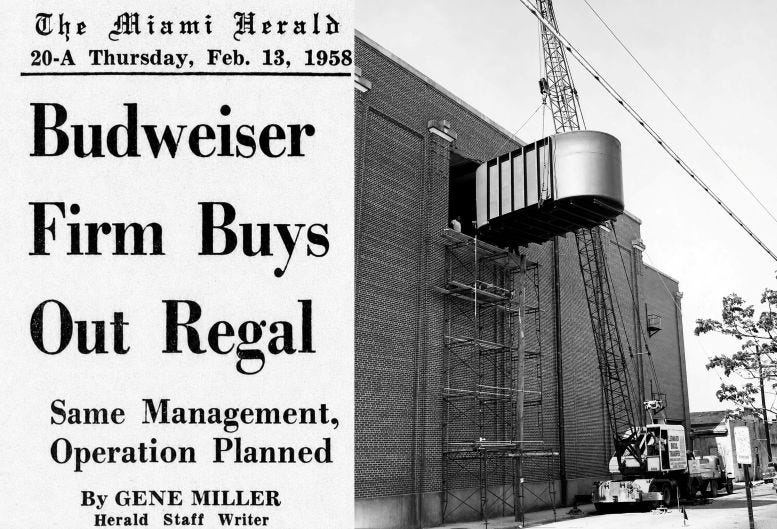
On February 6, 1958, the American Brewing Company agreed to sell its Miami brewery to Anheuser-Busch. The purchaser was primarily interested in the plant’s production capacity and intended to discontinue Regal Beer. Anheuser-Busch planned to devote the facility entirely to brewing Budweiser for distribution throughout the Miami market.
Federal authorities, however, challenged the acquisition on antitrust grounds. They argued that the transaction would give Anheuser-Busch excessive control over beer production and distribution in South Florida and significantly reduce competition in the local market.
After losing the antitrust case, the company was unable to proceed with the purchase as originally planned. Rather than close the Miami brewery, Anheuser-Busch arranged for the plant to be sold to another owner.
National Brewing Company
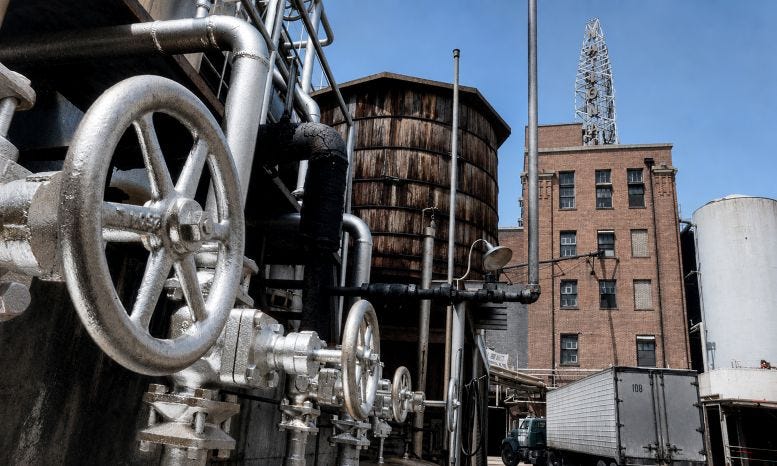
The National Brewing Company emerged as the only bidder for the Miami brewery, leaving Anheuser-Busch with little choice but to accept its offer for the property.
National quickly began operating the brewery at full capacity. In addition to continuing production of Regal Beer, the company used the facility to brew several of its own products under various labels, including Colt 45 malt liquor.
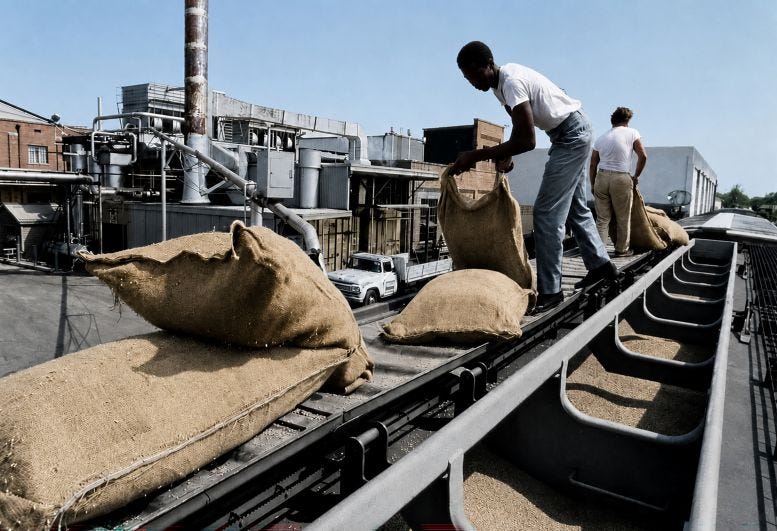
Although the Miami facility produced several brands, it continued to be commonly known as the Regal Brewery. The plant remained in operation until 1974, when National Brewing decided to transfer production of Regal Beer and Colt 45 to its brewery in Baltimore.
The closure eliminated 107 local jobs. During its final years, the Miami brewery produced approximately 350,000 barrels of beer annually. By comparison, National’s newer and more efficient Baltimore facility was capable of producing nearly two million barrels each year. From the company’s perspective, closing the aging Miami plant and consolidating production in Baltimore was a practical business decision.
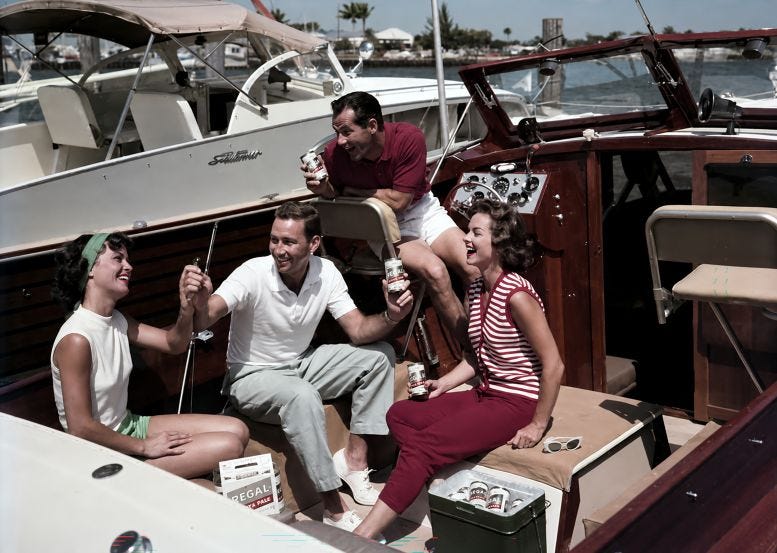
For many Miamians who grew up during the 1960s and 1970s, the brewery’s lasting legacy was not only Regal Beer itself, but also the glowing Regal neon sign and the distinctive, pungent aroma that drifted from the plant near the southwest side of the Interstate 95 and State Road 836 interchange, just outside downtown Miami.
Resources:
Miami News: "Miami's Very Own, Ice Cold Lager Reeb", Agnes Ash on June 20, 1964.
Miami News: "Regal Brewery Closed in Miami", Miami News on January 13, 1975.
My uncle, Bill Mahoney... a lifelong Miamian and retired postman, was a true beer connoisseur. He absolutely swore by Regal beer; so much so he named his man cave, his garage, the ‘Regal Inn’; this, before we called anything a ‘Man Cave. I can still recall seeing the scripted ‘Regal Inn’ lettering clearly visible from front of his NW 17 Street Miami home.
Thank you, Casey, for still another fascinating and informative article! The graphics are also really great! My first beer was a Regal, pilfered from my dad's supply while I was in high school. I had no idea of the various transitions that the Miami brewery went through before ending up in Baltimore. I lived and worked in Baltimore from 1974 to 1986, and enjoyed a lot of National Premiums (Natty Bo's), but none of them were as tasty and enjoyable as my first Regal!
Doug deWolfe
Odessa, Florida