


Less than A Week to the Webinar
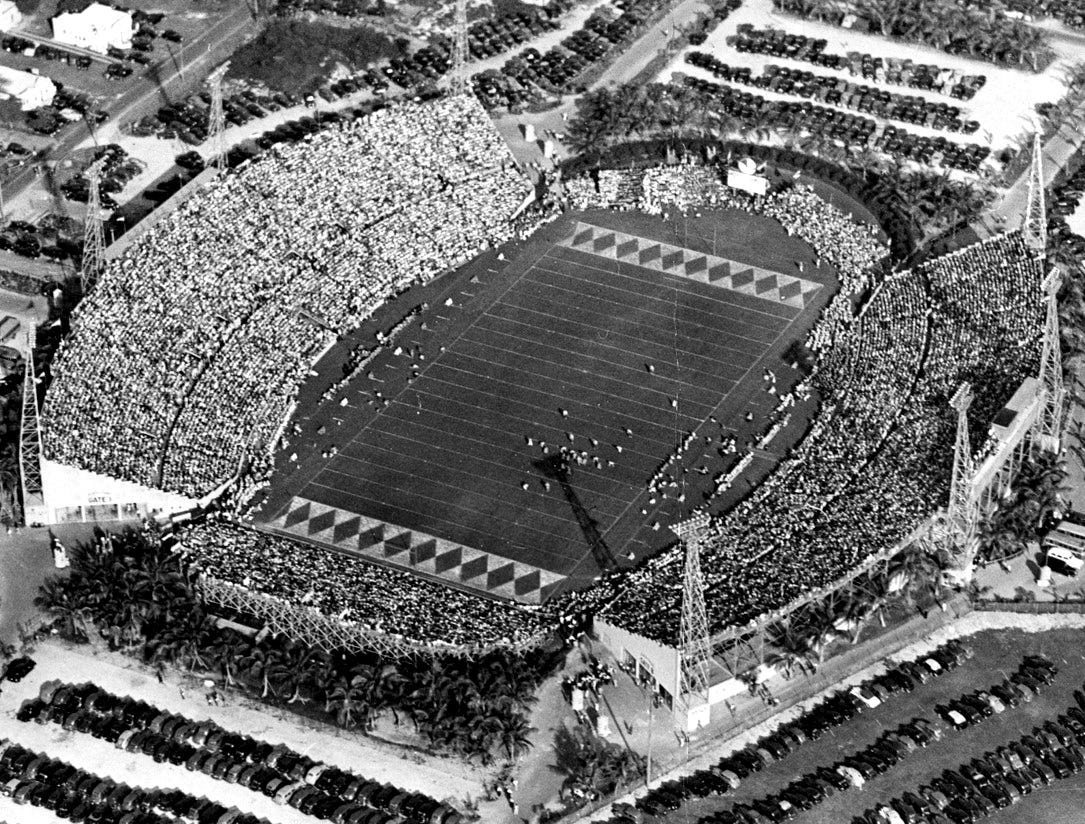
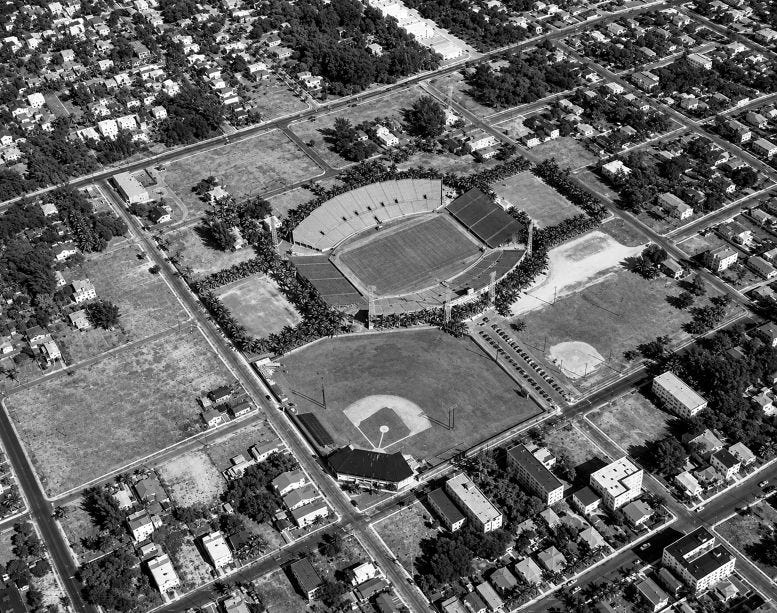
For more than seventy years, the Orange Bowl Stadium was one of Miami’s most revered landmarks, a place where sports, tourism, civic ambition, and community life came together. This webinar will explore the stadium’s formative years, beginning with the temporary wooden bleachers used for the earliest Orange Bowl games and continuing through the construction, expansion, and modernization of the permanent stadium between 1937 and 1958.
Conceived during the Great Depression, the Orange Bowl game was intended not only to showcase college football but also to attract winter visitors to Miami and strengthen the city’s struggling tourism economy.
The webinar will feature plenty of historic photographs and stories of Miami’s sports cathedral during its formative years. Only 50 virtual seats will be available for this event, so register early.
Webinar Details:
When: Wednesday, August 19, 2026
Time: 6:00pm – 7:30pm EDT
Cost: $16.00
If you cannot attend in person, the webinar will be recorded and shared with all registrants within 72 hours of the live event.
Anyone who is a paid subscriber to the Miami History Substack should have received an e-mail with a discount code allowing them to save $10 off the full price of a ticket. If you did not get the e-mail, please reach out to me at casey@sfwebnet.com and I will send it to you.
The presentation will introduce the colorful promoters, government officials, engineers, and civic leaders who transformed a modest municipal stadium into one of the largest football venues in the country. Particular attention will be given to Earnie Seiler, the creative booster known as the “Mad Genius,” whose relentless promotion helped establish the Orange Bowl game, secure federal support for the stadium, and inspire decades of expansion.
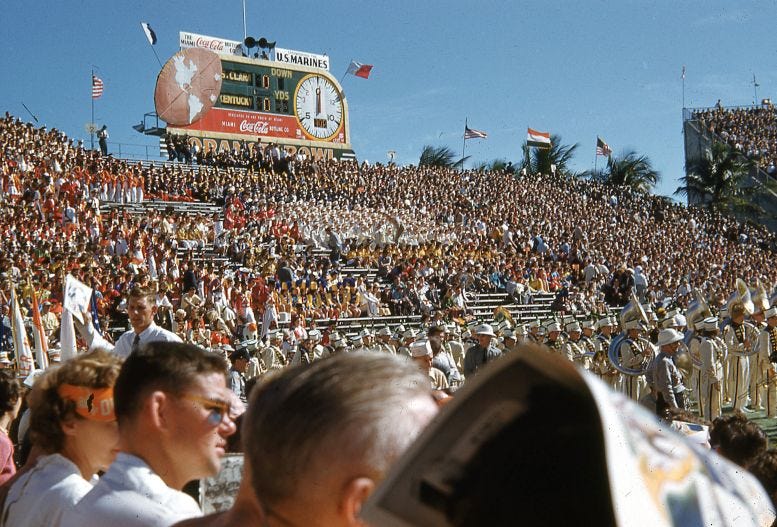
Attendees will also hear about memorable early events held at the stadium, including University of Miami football games, high school rivalries, Winston Churchill’s 1946 appearance, professional football, boxing, concerts, religious services, and a spectacular 1956 baseball game featuring Satchel Paige.
Attendees Will Learn:
How Miami’s desire to attract tourists during the Great Depression inspired the creation of a major New Year’s Day football game.
How the Orange Bowl evolved from games played at Moore Park and a temporary wooden stadium into a permanent concrete-and-steel structure.
How Earnie Seiler used ingenuity, personal connections, and unconventional promotional methods to build support for both the game and the stadium.
How federal New Deal assistance helped finance the construction of Miami Municipal Stadium in 1937, initially providing seating for 23,330 spectators.
Why the stadium was dedicated to civic leader Roddey Burdine and how President Franklin D. Roosevelt participated remotely in the 1937 dedication ceremony.
How growing demand for Orange Bowl tickets led to repeated expansions in 1945, 1947, 1949, 1953, and 1955.
How the Orange Bowl was home to the All-American Football League’s Miami Seahawks for one season in 1946.
Why the stadium’s official name changed from Roddey Burdine Stadium to Orange Bowl Stadium in 1949.
Why Earnie Seiler proposed transforming the venue into the Orange Bowl Memorial Stadium, complete with gardens and plaques honoring local war dead.
How the 1955 enlargement increased capacity to more than 76,000 seats and made the Orange Bowl the third-largest bowl stadium in the United States.
How the stadium became the host of so many epic high school rivalries through the years.
The story of the 1956 “World’s Greatest Baseball Party,” when Satchel Paige led the Miami Marlins to victory during an evening of baseball, music, entertainment, and charitable fundraising.
By the conclusion of the webinar, attendees will understand how the Orange Bowl’s first two decades established its identity as Miami’s football shrine and setting the stage for becoming one of the city’s most important cultural gathering places over the course of the next 50 years.